The study
In June 2025 the journal Nature Ecology & Evolution published the ancient genomes of 42 individuals from Papua New Guinea, the first ancient genomes from the country and from the Bismarck Archipelago. The paper, led by Kathrin Nägele with co-authors including Rebecca Kinaston, Glenn Summerhayes, Cosimo Posth and Johannes Krause, combines DNA with radiocarbon dates and new archaeological work. The dated individuals span about 2,500 years.
The people come from three areas: Watom Island in the Bismarck Archipelago, the northeastern coast of the mainland, and the South Coast near Port Moresby.
Where is Watom? Watom is a small island off the Gazelle Peninsula of East New Britain, near Rabaul, not in West New Britain. We include it here because it belongs to the same Bismarck Archipelago Lapita world as the sites of the Willaumez region described in Chapter 3.
Five people from Watom
Five individuals were excavated on Watom, from the area of the Late Lapita site known as Reber-Rakival. Their dates cover a wide span, from about 2,690–2,110 years ago to about 630–510 years ago. Chemical signatures in their bones show they ate a partly marine diet, as you would expect on a small island.
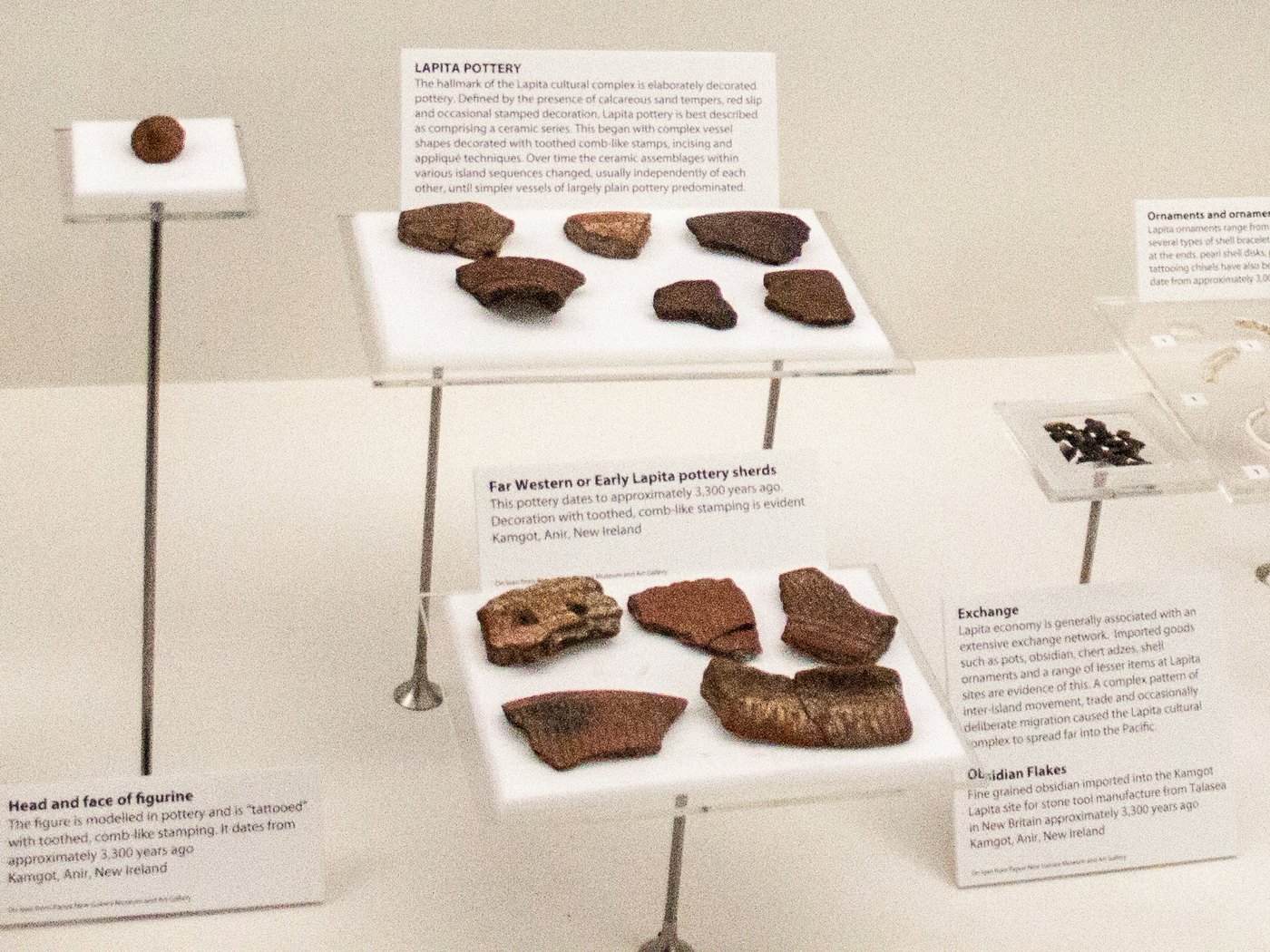
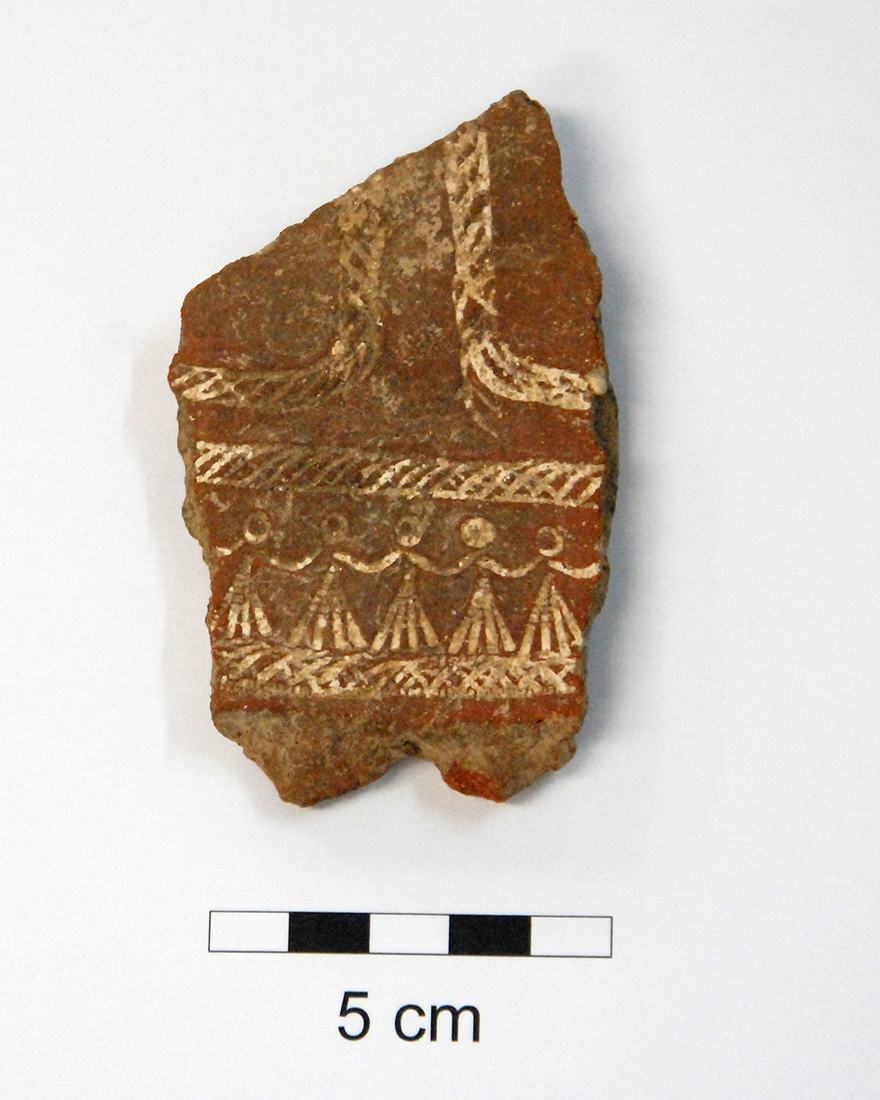
The oldest Watom individuals carry only Papuan-related ancestry, the deep ancestry of New Guinea and its islands. That is notable, because Watom is a place known for Lapita pottery, a tradition usually linked to newcomers with East Asian-related ancestry.
One Watom individual shows a rare case of cultural head-shaping, where the skull is gently bound in infancy so that it grows long. Head-shaping has been studied in New Britain before; this find adds an ancient example.
A slow meeting
From about 2,100 years ago, individuals in the study carry varying amounts of East Asian-related ancestry. The authors read the timing as a centuries-long delay: people with Asian ancestry arrived, but they did not mix genetically with local communities for a long time. Co-author Rebecca Kinaston of the University of Otago put it plainly when the study was released: the groups did not mix for a long time.
A correction. Some summaries describe "continuous gene flow" between Lapita newcomers and Papuan communities. The paper says the opposite for the early centuries: a long delay before mixing, and then mixing in varying degrees.
Neighbours who drifted apart
On the South Coast, two communities that lived close together within the past 540 years turned out to be genetically different. The authors estimate that they split about 650 years ago, at a time when settlement was intensifying and regional trade networks were forming. Neighbours can diverge when they trade, and marry, in different directions.
What it means for West New Britain
West New Britain's own story is told mostly through stone and clay: obsidian from Talasea and Mopir that crossed the sea for twenty thousand years, and Lapita pottery that appears after the Witori eruption. The Watom genomes add people to that story. They suggest the Lapita world was not a simple replacement of one population by another, but a long conversation between communities that kept their own ancestries for centuries before families began to join.
No ancient genomes from West New Britain itself have yet been published. Until they are, Watom is the nearest window.
Questions and answers
What did the 2025 ancient DNA study find?
It sequenced ancient genomes from 42 individuals in Papua New Guinea. The oldest show only Papuan-related ancestry; from about 2,100 years ago some carry East Asian-related ancestry, after a delay of centuries before the groups mixed.
Is Watom Island in West New Britain?
No. Watom lies off the Gazelle Peninsula of East New Britain, near Rabaul. It is part of the same Bismarck Archipelago Lapita world as the Willaumez sites of West New Britain.
Did Lapita people mix immediately with Papuan communities?
No. The study suggests a centuries-long delay in genetic mixing after people with Asian-related ancestry arrived.
Have ancient genomes been published from West New Britain?
Not yet. The nearest published ancient genomes come from Watom Island.